How to avoid homestay booking scams and check if a Malacca listing is legitimate
By Janice · Updated 2026-06-30
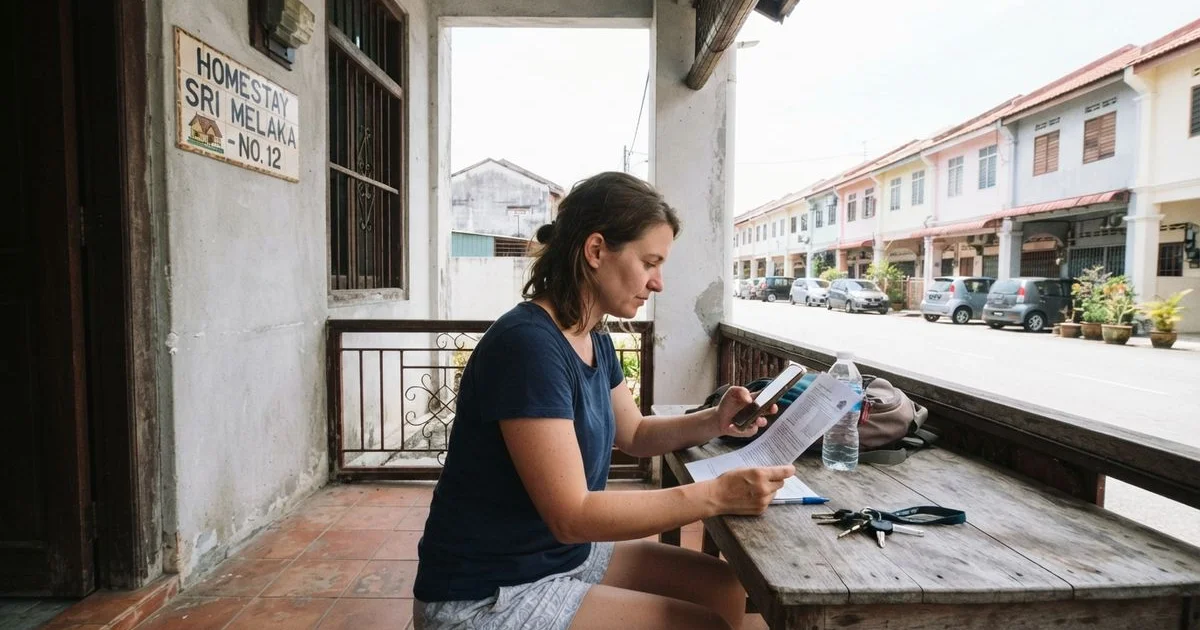
Most homestay bookings in Malacca go smoothly, but the format does carry more risk than booking a branded hotel, mainly because you’re trusting an individual host and a set of photos rather than a company with a front desk and a paper trail. A few checks before you pay reduce that risk substantially.
This is general information, not legal advice. For a specific dispute or concern about a booking, consult Malaysia’s consumer protection resources or independent legal advice.
The clearest red flags
Pressure to pay quickly, outside normal channels. A host pushing you to transfer money immediately, especially to a personal account with little other information, is the single most common scam pattern. Legitimate hosts are generally comfortable answering questions and giving you time to decide.
Vague or evasive answers to specific questions. Ask about exact bedroom count, parking, or the neighbourhood, and see how directly the host answers. A real host managing a real property answers specifics easily. Someone managing a listing that doesn’t exist tends to give generic, deflecting responses.
Reviews that feel too uniform or too recent. A property with dozens of detailed reviews spread across many months is a strong signal. A handful of glowing but generic reviews all posted within days of each other is worth extra scrutiny.
Photos that don’t quite match the description. Watch for stock-looking photography, images that don’t match the stated location, or a property description that changes between the listing and what the host tells you directly.
Verifying a listing before you pay
| Check | How to do it |
|---|---|
| Host responsiveness | Ask two or three specific questions and see how directly they’re answered |
| Review history | Look for reviews spread across several months, not clustered on one date |
| Photo consistency | Compare listing photos against any additional photos the host sends directly |
| Payment terms | Prefer a partial deposit to secure the date over paying the full amount upfront to an unverified host |
| Registration | Malaysia’s Ministry of Tourism runs a formal homestay registration programme; a host who can speak to this confidently is a good sign, though many legitimate short-term rentals operate outside it |
If something feels off
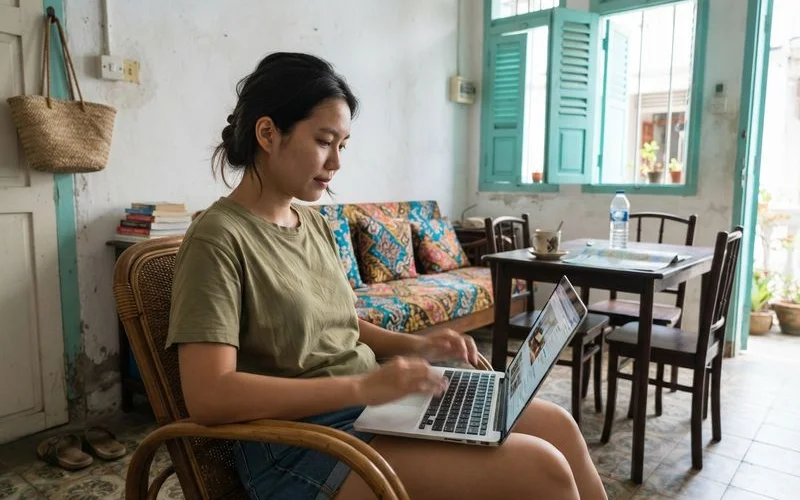
Trust the pattern, not a single detail. One slightly generic answer isn’t necessarily a scam. A host who avoids every specific question, pushes unusual payment methods, and has thin or clustered reviews together is a much stronger warning sign. When in doubt, it’s reasonable to walk away and book a listing with a longer, more consistent track record instead.
If you’ve already paid and believe you’ve been misled, keep every message and payment record, and raise it directly with the host first. Malaysia’s National Consumer Complaints Centre handles unresolved disputes between guests and accommodation providers if a direct resolution isn’t possible.
Third-party listing sites versus direct booking
Scams are more common on open marketplaces with minimal screening than on a directory that verifies listings before publishing them. That doesn’t mean every third-party listing is risky, but it does mean the burden of checking falls more heavily on you as a guest. If a listing appears on several different platforms with inconsistent details, like a different price or a different host name, treat that as a reason to dig deeper rather than assume it’s a simple oversight.
A note on group and family bookings specifically
Larger bookings, like a family reunion or a pool villa for a celebration, involve more money changing hands and more people counting on the property being real. It’s worth having one person in the group take responsibility for verifying the listing and host directly, rather than assuming someone else in a group chat has already checked, since that’s an easy gap for a scam to slip through when a booking is being coordinated by several people at once.
Booking from a screened directory
Our homestay listings are built from a verification and scoring process rather than raw, unscreened submissions, and our ranking methodology explains exactly how host responsiveness and review consistency feed into each score. Starting from a screened list is a meaningfully lower-risk way to book than a cold search.
FAQ
- How do I know if a Malacca homestay listing is real?
- Check for a consistent history of recent, detailed reviews, a host who answers specific questions directly, and photos that match the description. Be cautious of listings with only a handful of generic reviews all posted around the same date.
- Is it safe to pay a full homestay booking upfront by bank transfer?
- Confirm the booking details and host identity in writing first. Where possible, pay a partial deposit to secure the date and settle the balance closer to or at check-in rather than paying the full amount far in advance to an unverified host.
- What are the biggest red flags for a fake homestay listing?
- Pressure to pay quickly outside of normal booking channels, reluctance to answer specific questions about the property, and photos that look stock or inconsistent with the described location are the clearest warning signs.
- Are homestays in Malaysia required to be registered?
- Malaysia has a formal homestay registration programme through the Ministry of Tourism, though many short-term rental listings operate outside it. Registration isn't the only sign of legitimacy, but a host who can speak to it confidently is a good sign.